Review: 3D Porcelain Hippo Christmas Ornament
As a designer who has spent countless hours staring at digitizing software and even more time watching needles punch through fabric, I have learned to be skeptical of cute concepts. The gap between a digital preview and a stitched reality is often wide. However, when I first loaded the 3D Porcelain Hippo Christmas Ornament into my viewer, I paused. It wasn’t just another generic holiday clipart; it had a specific weight and texture implied in the lines that suggested a thoughtful approach to digitizing. For those of us running small shops or creating personalized gifts, finding assets that translate well from screen to thread is half the battle.
First Impressions and Visual Personality
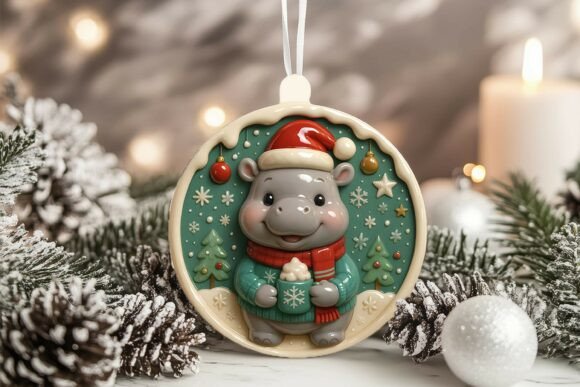
The immediate mood this design creates is one of whimsical nostalgia. The concept of a "porcelain" hippo implies a certain fragility and elegance, yet the subject matter—a hippopotamus—is inherently robust and playful. This contrast is where the design shines. In the context of Illustrations, this piece stands out because it avoids the flat, cartoonish look that plagues many holiday files. Instead, it suggests dimensionality.
For an embroidery project, this visual personality is crucial. When you are selling a handmade product, customers are buying the feeling the item evokes. This design feels boutique-ready. It doesn’t scream "mass-produced." It whispers "carefully curated." Whether you are an Etsy seller looking to refresh your holiday lineup or a hobbyist making gifts for family, the aesthetic fits seamlessly into modern farmhouse, eclectic, or traditional holiday decor styles.
Real-World Application: The Holiday Tote Test
To truly evaluate a machine embroidery design, you have to imagine it on actual goods. I recently worked on a batch of custom canvas tote bags for a local boutique’s holiday promotion. I needed a design that was festive but not overwhelmingly red and green. The 3D Porcelain Hippo Christmas Ornament became my test case for a neutral-toned holiday collection.
I stitched it onto a natural cotton canvas. The result was striking. Because the design mimics the look of porcelain, using high-sheen rayon threads in whites, creams, and soft pastels created a beautiful light-reflection effect. The satin stitch borders held up well against the textured weave of the canvas, providing a clean edge that defined the shape without looking bulky. This is a critical detail for any tote bag design; if the stitching is too dense, the bag becomes stiff. If it’s too loose, it looks amateurish. This design struck a balance that maintained the drape of the fabric while offering substantial visual impact.
Performance Across Different Fabrics
One of the biggest challenges in commercial embroidery is versatility. A design that looks great on a towel might fail on a cap. Here is how this ornament performs across various mediums:
- Sweatshirt Embroidery: On fleece or cotton blends, the design pops beautifully. The implied 3D effect works well with the loft of the fabric. However, you must use a cut-away stabilizer to prevent the weight of the stitches from pulling the fabric down over time.
- Baby Embroidery: For onesies or burp cloths, this design is adorable. But caution is needed. Ensure the stitch density isn’t too high for delicate skin. I recommend testing on scrap fabric first to ensure the backside is clean and won’t irritate a baby’s neck.
- Embroidered Patch Creation: This is arguably the best use case. The self-contained shape of the ornament makes it ideal for creating iron-on or sew-on patches. You can use a heavy-duty tear-away stabilizer and trim close to the satin border for a professional finish.
- Dark Fabric Challenges: Stitching white or light-colored designs on dark navy or black requires precision. Any gaps in the fill stitch will show the background fabric, breaking the illusion of the porcelain texture. Underlay stitches are critical here. Check your digitizing settings to ensure adequate coverage before committing to a final finished product.
Technical Considerations for Designers
Before you sell this as a digital embroidery file or use it in client work, there are practical steps you must take. Never trust the preview image alone. Always run a simulation in your software to check for potential thread breaks or excessive jumps.
Pay close attention to the small details. In a "porcelain" style design, highlights are often created with very short satin stitches or running stitches. On a small hoop size, these details might merge together if the needle size is too large. I recommend using a size 75/11 needle for general purposes, but dropping to a 65/9 for finer details if your machine allows it.
Thread color selection is also vital. Do not rely solely on standard white. Use off-whites, ivories, and light grays to create depth. A monochromatic palette can make the 3D Porcelain Hippo Christmas Ornament look sophisticated rather than childish. Test your thread colors on both light and dark backgrounds to see how the contrast affects the perceived dimension.
Commercial Viability and Brand Consistency
For craft business owners, consistency is key. This design fits well into a broader collection of design assets that focus on whimsical animals or vintage-inspired holiday themes. It adds value to your shop because it offers something unique. Customers are tired of seeing the same snowflakes and reindeer. A porcelain hippo is memorable. It encourages engagement because it is unexpected.
When creating printable mockup images for your online store, place this design on items that suggest comfort and luxury. Think velvet pillow covers, thick knit scarves, or high-quality ceramic mugs (if using sublimation alongside embroidery). The way you present the embroidery project influences the perceived value. A well-stitched hippo on a premium tote bag can command a higher price point than the same design on a cheap promotional pen holder.
Final Verdict
The 3D Porcelain Hippo Christmas Ornament is a strong contender for your holiday repertoire. It is not just a cute image; it is a well-thought-out applique design alternative that relies on stitch technique to create its charm. It requires a skilled hand to maximize its potential, particularly regarding thread choice and stabilizer selection. But for those willing to put in the test stitches, the reward is a standout personalized gift or small shop product that feels special.
Remember to always verify the license terms if you plan to sell finished items. Assuming it is cleared for commercial use, this design is a reliable tool for adding a touch of whimsical elegance to your custom apparel and home decor lines. It bridges the gap between fun and sophisticated, which is exactly what modern buyers are looking for.